· Marcus Hale
Night Fishing From the Bank: Rod Holders, Bite Alarms and Lights That Don't Spook Fish
The bank you fished all afternoon is a different place an hour after sunset. The rod tip you read bites from is gone, the path back to the car has moved, and every quick job now takes a headlamp and both hands. Anglers go anyway, on the expectation that fish move closer to the bank after dark.
This guide is about running a bank session after dark. Choosing between holder types is a separate question, and our best rod holder for bank fishing guide compares them.
Set the spread before the light goes
Arrive with light to spare and treat the last hour of daylight as the working hour. The U.S. Naval Observatory puts the end of civil twilight at the center of the Sun six degrees below the horizon, and says artificial light is normally required for ordinary outdoor work after it. Anything you have not set up by then is done by feel.
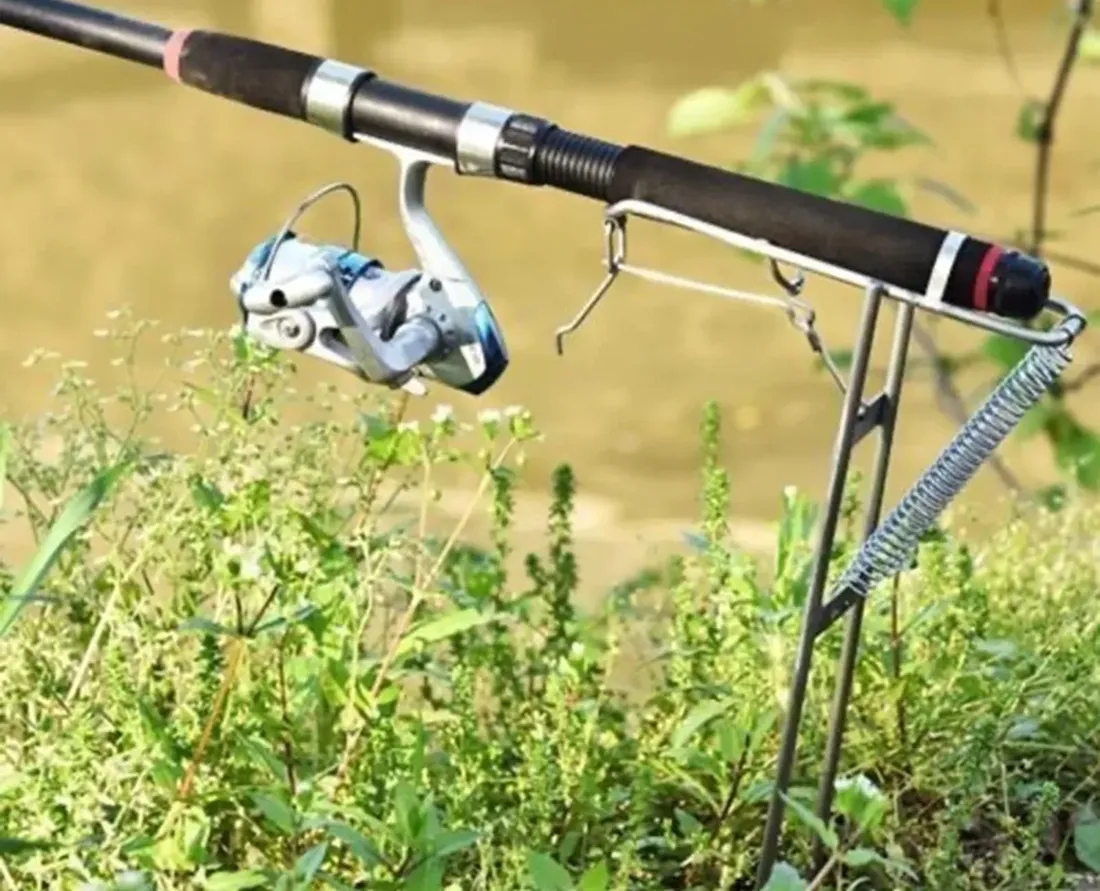
Push each automatic rod holder in with the usual straight push and twist, lean it slightly back from the water, and check that the spring arm cocks and releases cleanly before the rod goes on. About 14 inches (35 cm) of chrome-plated steel drives into a bank in one push when you can see the ground you are staking, so do the planting first.
Spacing and fanning the casts are covered in how to fish two or three rods at once; night adds one rule, which is to give each rod more room than you would by day. A line you can trace with one sweep of the headlamp will not be crossed at midnight.
Then mark the ground: reflective tape on each holder, or a glow stick hung from the cradle, turns a dark bank into a row of points you can count from your seat. Walk the path from your chair to each rod once while you can still see the roots, because that is the walk you will make at speed when a rod fires.
Field tip: Set the rod angle before dark and leave it: a tip kept low keeps the line out of a night breeze and gives the spring arm a clean lift when it fires. How to hold a fishing rod covers rod angle and the hook set for the moment the rod is back in your hands.
Bite detection when you cannot see the tip
The most reliable night signal is mechanical. When a fish pulls hard enough on the bait, the trigger on the automatic holder releases, the loaded arm swings up, and the hook is set, whether you were watching, rebaiting the other rod, or halfway through a sandwich. The sound of that release carries across a quiet bank.
Everything else is a reporter. A bell clipped near the tip rings on a tap, a chemical light stick taped to the tip shows a nod against the dark, and an electronic bite alarm with the line running through it gives you a tone, so you know which rod went without lifting the headlamp. None of those set the hook; they tell you to come and do it. Pair a reporter with the holder that acts and you get both.
| Signal | What it tells you | What it does about the bite |
|---|---|---|
| Spring-arm holder release | A fish pulled hard enough to trip the trigger | Sets the hook itself, then holds the rod |
| Clip-on bell | The tip moved | Nothing; you set the hook |
| Tip light | The tip moved, visible from your seat | Nothing; you set the hook |
| Electronic alarm | Line ran off the spool | Nothing; you set the hook |
Set the trigger tension by feel before dark, and firmer than by day if a breeze or current is pushing on the line. Surf fishing rod holders covers what a constant pull does to a trigger setting, and a river at night is the same problem with the drift hidden.
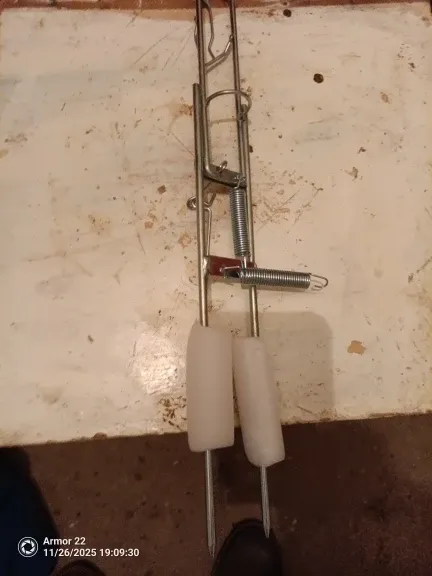
Wade K., a verified buyer, put the mechanism simply: "Cool stand. The spring is tight, it hits well and sets the hook on the fish." At midnight, the arm is the only thing on the bank still watching the line.
Light that stays off the water
The temptation is to light the bank like a workshop. Most night anglers work on the opposite assumption: the darker the water stays, the closer the fish come, and a white beam swept across the margin costs the next hour.
Light discipline is a short list. Turn the headlamp on facing the ground behind you, not the water. Use the dimmest setting that lets you see the hook eye. Keep a second small light in a pocket, because the one on your head dies at the wrong moment. Leave a fixed low light on the ground by your seat, so the holders and the path stay visible without anything shining forward.
A fired spring arm is the one signal that needs no light at all: the sound tells you which rod, and the arm holds the rod at working angle until you get there.
Staying safe on the bank after dark
Most night accidents on a bank are daytime slips made in the dark: a step onto an edge that undercuts, a heel on wet clay, a hand reaching for a rod a stride further away than it felt. The fix is layout: plant the holders so every rod is reachable from firm ground, with the water in front of you and never beside your feet.
Deep, cold, or moving water at night is a different category. A life jacket is the plain answer, and if you fish alone, someone at home should know the spot and the time you expect to be back. Keep keys and a charged phone in a zipped pocket, not in a bag on the ground.
Spare rods and the rod you are rerigging want to be off the ground too. A portable fishing rod holder stands eight rods upright on telescopic spiked legs behind your seat, so nothing lies in the grass for a boot to find. The holders at the water fish; the stand behind you parks.
Rules are the other half of safety. Night fishing, the number of rods you may fish at once, and the hours a water is open are set by each state, and sometimes by the water itself. Check your state wildlife agency before the trip.
Packing down in the dark without leaving a holder behind
The setting-up order and the keep-rod-and-holder-together rule live in the multi-rod guide, so here is only what night adds: a spoken count before dark, three rods, three holders, two lights, one stand. When the session ends, the count is the checklist, and you do not leave the bank until the numbers match.
Sweep the swim with the headlamp on full before you walk away, once, low along the ground. Chrome-plated steel throws light back from a long way off, one more reason a bright holder is the right one for a night bank. Then check the path in, because the dropped item is almost always on the path and not at the swim.
The drive home is where tired anglers break tips. Rods rigged in the dark ride better broken down, and fishing rod holders for trucks covers cab, bed, and tailgate, with the same rigged-or-broken-down question applying to any vehicle.
What we found on our own night sessions. Every holder that fired in the dark was one we had planted and cocked in daylight, and the release was loud enough to hear from the chair every time. The rods we lost track of were spares lying in the grass, never the ones standing in a holder.
Night fishing by the numbers
below the horizon: where the U.S. Naval Observatory places the end of civil twilight, after which artificial light is normally required for ordinary outdoor activities
— U.S. Naval Observatory, Astronomical Applications Department, Rise, Set, and Twilight Definitions, accessed 2026
Americans went fishing in 2022, most of them from the bank and shore where a night session is set up on the ground
— RBFF & Outdoor Foundation, Special Report on Fishing, 2023
total economic output generated by recreational fishing in the U.S. each year
— American Sportfishing Association, Sportfishing in America, 2022
Civil twilight is the deadline the evening runs on: setup before it, feel and sound after it.
Our picks for a night session
The automatic spring rod holder is the night tool: it sets the hook when a fish takes, and its release is a sound you hear from the chair. A single is $16.95, the two-pack $24.95, the three-pack $34.95. Spare rods stand on the portable folding stand. All ship free in the US in 6 to 10 business days, with a 30-day money-back guarantee. See how we test.
Night fishing questions
How do you know when you get a bite at night?
By sound and by what the holder does. On an automatic spring holder the trigger releases when a fish pulls, the arm snaps up and sets the hook, and the release is audible from your seat. A bell, a tip light, or an electronic alarm on the line adds a signal that tells you which rod went; the holder is what acts on it.
Can you fish more than one rod at night?
Where your state allows it. Rod limits, night hours, and which waters are open after dark are set by each state wildlife agency, and some waters carry their own rules, so check before you go. Where several rods are allowed, give the night spread more room than a daytime one, so every rod is reachable in the dark.
Does a headlamp scare fish?
Most night anglers assume a beam on the water does, and fish with the light pointed at their hands and the ground instead. A dim or red setting is enough to bait a hook and unhook a fish. The holders need no light: an automatic holder sets the hook in the dark, and the sound of the arm tells you which one fired.