· Marcus Hale
Surf Fishing Rod Holders: Sand Spikes, Depth & Tide Timing
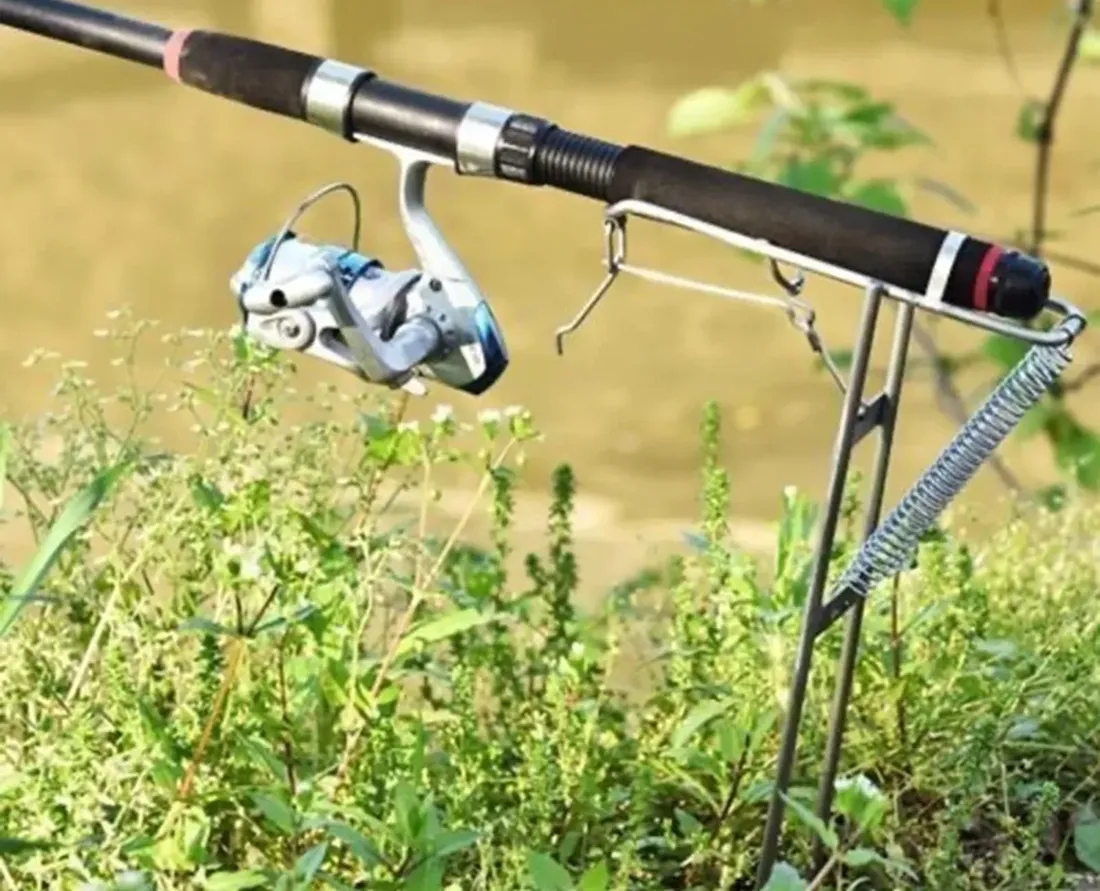
Surfcasting asks things of a rod holder that a riverbank never will. The ground shifts under it, the water walks toward it all session, and the rod on top is long and heavily weighted to hold bottom in moving water. A spike that stands solid on a lake bank can be flat in the swash twenty minutes after the tide turns.
What follows is that job only. Where the spike goes, how deep it sits, how the tide runs your session, and what salt does afterwards. If you are still choosing between holder types, our guide to the best rod holder for bank fishing already compares spikes, folding racks, bank sticks, and pods, so none of that is repeated here.
Why a surf holder is a different tool
On a riverbank the ground is the constant and the water stays put. On a beach both flip. Wet sand grips only while it stays wet, and the spot you picked at low water can be knee deep four hours later. Add a heavier rod and a steady side pull from the sweep, and the load on the base is nothing like still water. Of the four things we score on how we test, the surf punishes stability hardest.
How deep should a sand spike go?
The twist is the part most people skip. Pushing straight down compacts a plug of sand under the point and stalls the spike short, while a quarter turn each way as you press lets the point cut instead of ram. Once it is in, waggle the top of the shaft. If it moves at all, reset it deeper.
Length is what a short stake gives up. Our automatic spring fishing rod holder stands about 14 inches (35 cm) in chrome-plated steel, a good working length for damp packed sand, piers, and jetty walls. On a steep beach in dry sand there is less shaft to bury, and that is a case for a longer spike or a freestanding stand.
Wet sand, dry sand, and the wash line
Walk the beach before you set anything. The wrack line records the last few hours, and it beats guessing from where the waves break now, because a bigger set runs much further up than the average one. On a falling tide, a hand's width above that mark gives you a firm base and dry feet.
Dry sand higher up looks convenient and is the worst ground on the beach. Nothing holds the grains together, so the first proper pull tips the lot. If you have to set up there, dig to the damp layer, seat the spike in that, then backfill and stamp around the base.
Timing the tide around your holder
between one high tide and the next on a semidiurnal coast, the rhythm every beach session runs on
— NOAA National Ocean Service, Tides and Water Levels tutorial, accessed 2026
for the water at the shore to go from high to low, or from low back to high
— NOAA National Ocean Service, Tides and Water Levels tutorial, accessed 2026
Those two numbers are the whole planning problem. Fish the back end of a flood and you set up once, high on firm sand, and the water comes to you. Fish a big ebb and you chase it down the beach, resetting the spike each time.
Field tip: Push a stick into the sand at the water's edge when you arrive. Ten minutes later you know whether the tide is making or falling without opening anything.
Rod height and tip angle in the surf
This is the one place where surf advice openly contradicts the bank advice on this site. On a lake you drop the tip to cut the wind. In the surf that same low line sits in moving water for its whole length, and the sweep drags it sideways until your bait is nowhere near where you cast it. Grip and the hook set are covered in how to hold a fishing rod.
What salt and sand do to a holder
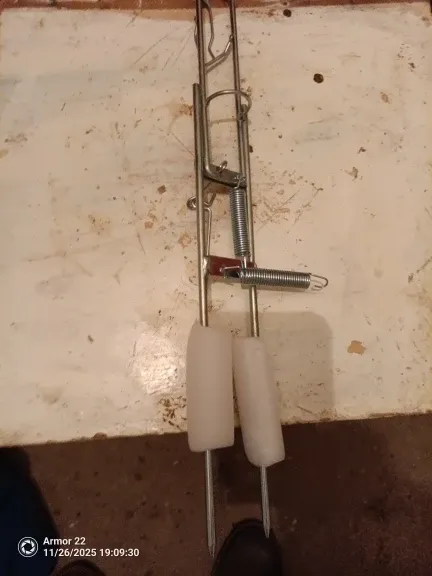
Chrome plating is why the holder survives this at all. It resists rust far better than bare metal or thin wire, but a wet salty spike packed into a bag trip after trip will find any weak point. Sand is the quieter problem: it works into the coils and the trigger, and a gritty mechanism fires late or not at all.
Springs are the one part that sees repeated load, which is exactly why they are held in place rather than moulded in: if one ever loses tension after years of refills, it lifts out and a new one drops in. The holder itself does not age with it.
One spike, several spikes, or a stand?
Running a spread is the real reason surf anglers own several holders. One rod past the bar, one in the gutter closer in, and you know within an hour where the fish are sitting. That only works if the holder does something while you look the other way. Dylan R., a verified buyer, put it plainly: "The mechanism works perfectly. It hits hard and hooks the fish on its own."
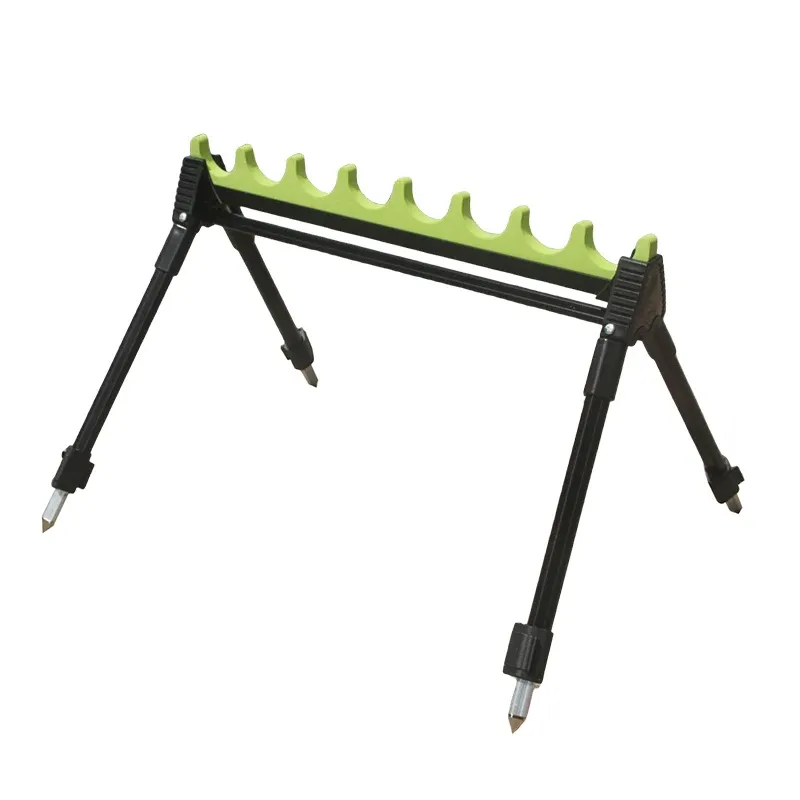
When the ground beats every spike you own, a portable fishing rod holder takes over. It stands as a tripod on its own footprint, carries eight rods in U-shaped slots, and its telescopic legs adjust one at a time with flip-buckles, which is what lets you level it on a sloping beach. The leg tips finish in ground spikes for extra grip on a windy day. A pipe build is covered in our DIY fishing rod holder guide.
What we found on the sand. Across our own bank and shore testing the pattern held every time. On packed shoreline sand the automatic spike seated with a firm twist and the spring fired cleanly. In loose dry sand it needed a deeper push and a backward lean before it would hold, and on rocky hardpan it would not seat at all. The freestanding stand did not care, because it never asks the ground for anything.
Surf fishing by the numbers
saltwater fishing trips U.S. anglers took in 2023, a large share of them from shore and jetties
— NOAA Fisheries, Fisheries of the United States, 2023
in sales impacts generated by U.S. saltwater recreational fishing
— NOAA Fisheries, Fisheries of the United States, 2023
Our picks for the beach
For damp packed sand, piers, and jetties, the automatic spring rod holder is the one we stake first. For loose sand or a spread of rods, the portable folding stand stands on its own instead. Both ship free in the US and arrive in 6 to 10 business days. See how we test, the buyer reviews, or our fishing guides.
Surf rod holder questions
How long should a surf fishing rod holder be?
Longer than a bank spike, because sand gives way where soil grips. Dedicated open-beach sand spikes run well past knee height so a good share of the shaft stays buried. Our automatic spring holder stands about 14 inches (35 cm), which suits damp packed sand, piers, and jetties rather than a steep beach in dry sand.
Will a rod holder stay put in loose dry sand?
Not reliably, and that is the weak point of every spike. Dry grains flow around the shaft instead of gripping it, so the holder rocks free under a loaded rod. Drive it deeper, lean it back toward the beach, and pack damp sand around the base. If it still moves, use a freestanding stand.
Can I use an automatic hook-set holder in the surf?
Yes, and it earns its place when you run more than one rod. Set the trigger heavier than you would on still water, because surf pulls on your line constantly and a light setting fires on a wave. Give it a few casts to find the tension a swell will not trip but a fish will.