Home > Blog > Fishing rod storage ideas
· Marcus Hale
Fishing Rod Storage Ideas: Garage Walls, Ceilings, Cars & the Off-Season
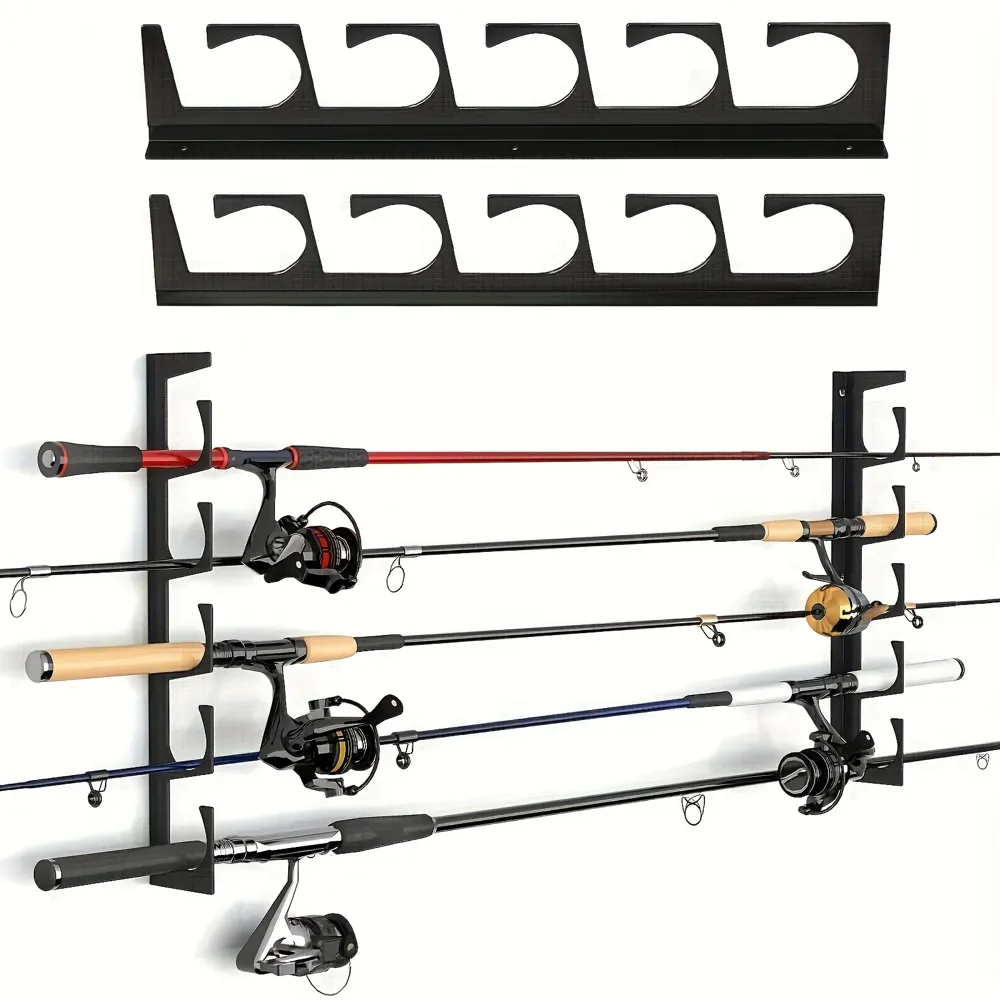
A collection creeps up on you. Two rods lean in a corner, then four, then someone knocks the bundle over reaching for a bike and a tip snaps at the second guide. Storage is not really about tidiness. It is about where the weight of a rod rests for the eleven months a year it is not being cast.
This guide covers the collection at rest: how much wall a rod needs, when the ceiling earns its place, how rods ride to the water, and what changes before a rod sits still all winter. Building a holder is a separate subject, already covered in our DIY fishing rod holder guide.
Start with a count and a tape measure
Most anglers pick the wall first. Do it the other way. Lay your longest assembled rod on the floor along the wall you had in mind and see what it runs into: a light switch, a door swing, the arc a car door makes when it opens. That last one catches people out every season, because the obstacle only exists when the car is parked. Then split the count: rods that stay assembled with a reel need a rack, while two-piece rods in a sleeve go on a shelf.
Why a stored rod lies down
The tip is the thinnest part of the rod, and it is exactly the part that ends up pressed against a wall in a corner stack. Our fishing rod rack is built around the two-point idea: it clamps the rod at the body, near the reel, and hooks it again closer to the tip. Five rods per rack and a set of two in the box means up to ten, none of them resting guides on a neighbour's line.
Garage wall storage
Find the studs before you commit to a height, not after: once you know where they land, you are only choosing how high. Chest height suits most garages, above a bin or toolbox, low enough that lifting a loaded rod out is not a stretch. Leave a hand's width of clear air under the tips, because anything stored below the rod line eventually gets pushed up into a tip section.
Ceiling storage when the walls fill up
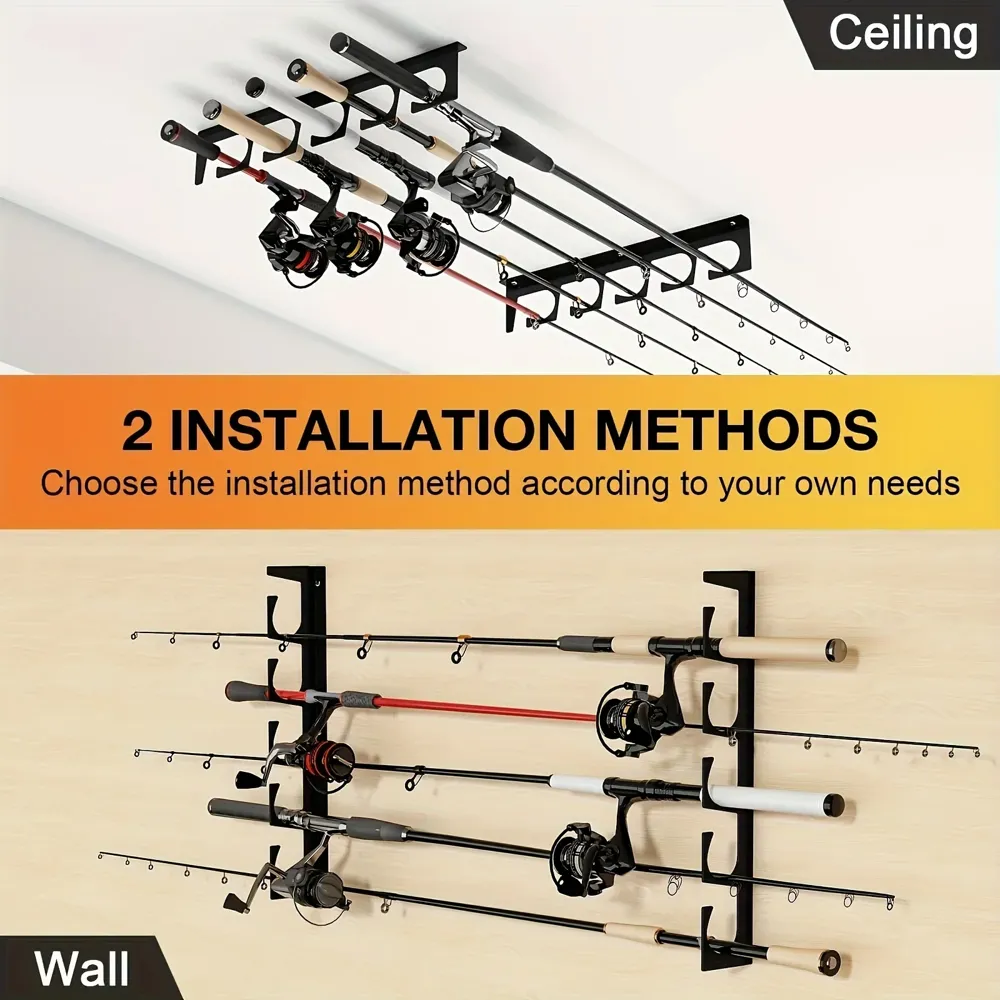
The same rack mounts either way, flat on a wall or overhead, which makes this a placement decision rather than a second purchase. Run it parallel to the joists you are fixing into so both ends land on solid timber, then walk the finished line once with your arm raised. If your hand touches a tip, move the rack six inches: a tip you can reach by accident is a tip that gets caught.
Storage that travels: the back seat
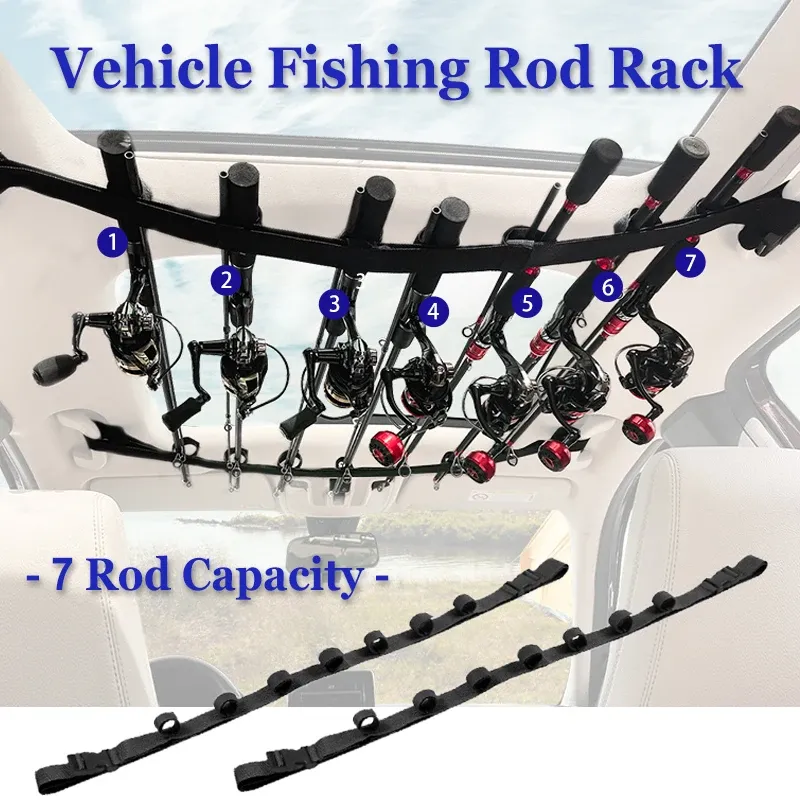
The drive is the part of storage nobody counts as storage, and it is where most damage happens. Our fishing rod holder for car is a polyester strap that loops over the headrest posts or the ceiling grab handles, holding 5 or 7 rods parallel above the seats. It adjusts from 33.5 to 66.9 inches (85 to 170 cm) and weighs about 6.7 oz (190 g), so it lives in a glovebox between trips. Thread the butts in first, so the reels sit toward the middle of the car. One verified buyer put the fit question to rest: "Great product, even for a hatchback car."
Putting rods away for the off-season
Backing off the drag is the step people skip. The washers sit under spring pressure while the knob is tight, and holding that all winter flattens them, so the drag comes back stiff on the first trip of the season. Loosen the knob until it spins freely: three seconds per reel. Location matters too, since an attic in July and a cellar in February are the two worst rooms in a house, one for heat, the other for damp.
Arranging a collection you use
With two racks you can make that explicit: one for the current season, one for everything else, and a five-minute swap when the fishing changes. Storage at the water is a different tool again, and both of ours are below.
Storage in short. Rods left standing in a corner end up with their tips pressed against the wall, and a reel stored with its drag knob tight comes back stiff on the first trip of the season. Give every rod two points of support, back the drag off before winter, and keep the rods you fish this month in the easiest slots.
Rod storage by the numbers
Americans went fishing in 2022, and most of them store their rods at home rather than at a marina
— RBFF & Outdoor Foundation, Special Report on Fishing, 2023
total economic output generated by recreational fishing in the U.S. each year
— American Sportfishing Association, Sportfishing in America, 2022
American jobs supported by the recreational fishing industry
— American Sportfishing Association, Sportfishing in America, 2022
Our storage picks
For the garage, the fishing rod rack mounts on a wall or a ceiling and holds up to 10 rods across the set of 2. For the drive, the car rod holder straps 5 or 7 rods above the seats. At the water, the portable stand takes eight on spiked telescopic legs and the automatic spring holder works the rod you leave out. All ship free in the US and arrive in 6 to 10 business days. You can also read the buyer reviews.
Rod storage questions
Should fishing rods be stored horizontally or vertically?
Horizontally, whenever you have the wall or ceiling for it. A rod resting on two supports carries its own weight evenly along the blank. Standing a rod on its butt in a corner puts that weight on one point and lets the tip lean against a wall for months, which is how a rod picks up a permanent bend. Vertical storage is for a day, not a winter.
How much wall do I need for a rod rack?
Measure your longest rod, then add about a foot. Most spinning and casting rods run 6 to 8 feet assembled, so a clear 9-foot run of wall covers almost any collection. Our rack cradles 5 rods per unit and ships as a set of 2, so the pair needs either one long clear run or two shorter ones on facing walls.
Can I store fishing rods in a garage?
Yes, and most anglers do. A garage swings in temperature and humidity, so two habits matter more than the rack itself: wipe the blank and guides dry before the rod goes up, and back the drag off so the washers are not compressed for months. Keep rods off the floor and away from where a car door opens.
How do you transport fishing rods in a car without damage?
Support them at two points, above the seats, tips all facing the same way. Our car holder is a polyester strap that adjusts from 33.5 to 66.9 inches (85 to 170 cm) and loops over the headrest posts or the ceiling handles, carrying 5 or 7 rods clear of the load floor so reels and tips never rest on each other.